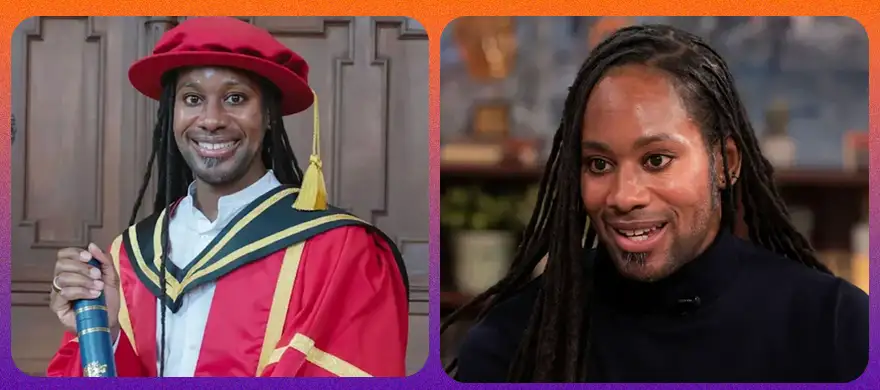
Jason Arday, the British academic of Ghanaian descent who became Cambridge University’s youngest Black professor, was found dead in his Battersea apartment on August 14th, 2026.
Metropolitan Police officers attended an address on Daley Thompson Way after London Ambulance Service was called just after 3pm. A 41-year-old man was pronounced dead at the scene. Police said the death is being treated as unexpected but is not believed to be suspicious. A file is being prepared for the coroner.
Arday had resigned as professor of sociology of education at Cambridge on August 5th, 2026, days after the university announced an investigation into new information about his academic qualifications and honorary appointments. He denied plagiarism claims that had circulated for weeks, though he admitted errors in earlier work. The allegations first gained traction after comparisons of passages in his PhD thesis with earlier research by another academic.
His family, in a statement released through publisher Simon & Schuster UK, said they were in shock to have lost “this amazing father, partner, brother, uncle and son.” They added that a campaign of misinformation and sustained abuse since he took the Cambridge role had been too much for him. Cambridge Vice-Chancellor Professor Deborah Prentice said the university was desperately saddened. London Mayor Sadiq Khan described the public scrutiny as an unacceptable hounding. UK Prime Minister Andy Burnham called the death a tragedy on many levels and urged a moment for reflection.
Arday was born on May 9th, 1985, in Clapham, south London, to Ghanaian parents. His mother Gifty worked as a mental health nurse and anti-racism activist; his father Joseph was a chef. He grew up as one of four brothers on a council estate. Public accounts of his early life described a diagnosis of autism and global developmental delay, with claims he did not speak until age 11 and struggled with reading and writing until later. He later trained as a PE teacher, completed degrees, and rose through academic posts at institutions including Durham and Glasgow before the Cambridge appointment in 2023.

The plagiarism row and questions over aspects of his personal story, including fundraising and endurance claims, intensified in the weeks before his resignation. Liverpool John Moores University, which awarded his doctorate, had previously upheld the degree. Other universities reviewed related appointments.
This case sits against earlier high-profile academic deaths that gripped Ghanaian audiences, including the 2020 murder of University of Ghana law lecturer Professor Emmanuel Yaw Benneh, found tied and killed in his East Legon home, and the 2025 killing of UEW physics professor Mawuadem Koku Amedeker, whose body was discovered buried on his own compound in Winneba after he was reported missing. Those cases involved clear violence and arrests. Arday’s death, by contrast, carries no suspicion of third-party involvement according to police statements as of August 15th, 2026, yet the speed of the fall from celebrated appointment to resignation and death has left the same public questions about pressure, scrutiny, and institutional response.
How did the combination of academic allegations and relentless online and media examination intersects with the mental load on high-profile Black academics of African descent working in elite UK institutions? Arday’s own statements before resignation spoke of an unrelenting level of public scrutiny. His family’s reference to a multi-year campaign of abuse frames the timeline differently from pure focus on the plagiarism claims themselves.
Police continue their work and the coroner will receive a file. No further official details on the precise circumstances inside the apartment have been released as of August 15th, 2026.
The death closes a chapter that began with global headlines about a Ghanaian-heritage scholar breaking barriers at Cambridge and ended with an unexpected finding in a south London flat.