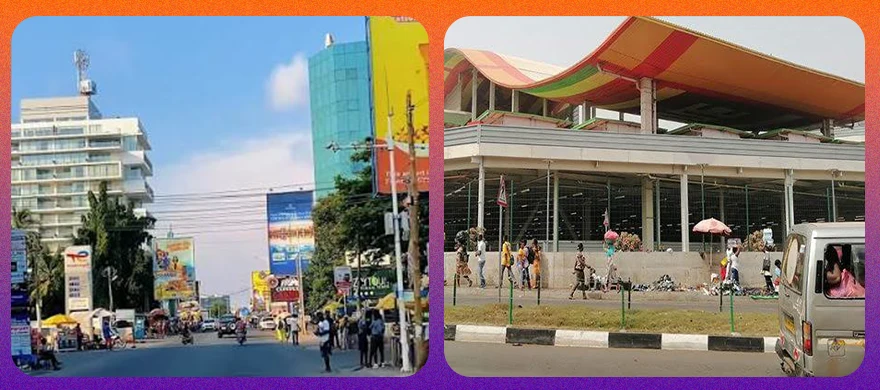
Accra costs more than Kumasi for most daily expenses while offering denser job markets, nightlife and international services. Kumasi delivers lower rent, food and transport bills plus a stronger cultural rhythm rooted in Ashanti tradition. Data from CityCost and Expatistan as of August 2026 put Accra’s overall cost of living 64 percent to 117 percent higher depending on household size.
A single person spends roughly $1,118 a month in Accra with rent included against $515 in Kumasi. Couples face about $1,757 in Accra versus $861 in Kumasi. Families of three average $2,396 in Accra and $1,207 in Kumasi. These gaps drive the practical choice for many Ghanaian workers and families deciding where to settle or relocate.
Cost of Living Breakdown
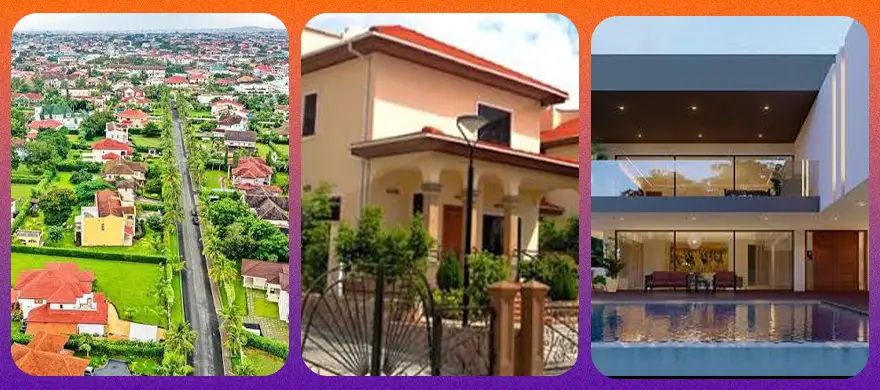
Housing forms the biggest gap. One-bedroom city-centre apartments in Accra commonly sit higher than comparable units in Kumasi. Premium Accra areas such as East Legon, Airport Residential and Cantonments command rents that can reach several thousand cedis monthly for modern two- or three-bedroom spaces. Kumasi neighbourhoods like Nhyiaeso, Ahodwo and Ridge offer similar space at lower figures, often 30 to 50 percent less according to recent property listings and cost-of-living trackers.
Food and groceries also run higher in Accra. Street food and local market staples remain affordable in both cities, yet imported items, restaurant meals and supermarket prices pull Accra’s grocery bill upward. Expatistan data from 26th August 2026 shows food costs in Accra about 67 percent above Kumasi. Transport follows the same pattern. Trotro fares, Bolt rides and monthly public-transport passes cost more in the capital. Fuel prices stay close, but distance and congestion raise the effective daily spend in Accra.
Salaries reported on some platforms appear higher on average in Kumasi after tax, though Accra concentrates more formal-sector and international roles. Purchasing power therefore often stretches further in Kumasi for the same income level.
Traffic and Daily Movement
Accra’s traffic remains a defining feature of life. Peak-hour journeys across the city can stretch well beyond an hour even for moderate distances. Many residents leave early or rely on a mix of trotro, Bolt and private cars. Kumasi experiences congestion, especially around Kejetia and major arteries, yet the overall pace feels less crushing for many long-term residents. Road conditions between the two cities still demand careful planning for weekend trips home.
Culture and Social Pace
Accra functions as Ghana’s cosmopolitan hub. It mixes Ga roots with migrants from every region plus a visible international community. Nightlife in Osu, Airport and East Legon, beach access at Labadi and a denser calendar of concerts, restaurants and events set the tone. Kumasi anchors Ashanti identity. Manhyia Palace, traditional festivals and the scale of Kejetia Market shape daily experience. Residents often describe a stronger sense of community continuity and less pressure to keep up with the capital’s faster social tempo.
Both cities share Ghanaian hospitality and the “come and chop” culture, yet the expression differs. Accra’s diversity produces more hybrid social scenes. Kumasi’s denser Ashanti majority keeps language, dress and family expectations closer to traditional norms for many households.
Safety and Livability
Numbeo crime indices as of mid-2026 place Accra’s crime index at 44.26 and safety scale at 55.74. Kumasi scores 38.84 on crime and 61.16 on safety. Daytime walking safety rates higher in Kumasi. Night-time figures sit closer between the two. Corruption perceptions remain elevated in both. CDD-Ghana’s Cities Monitor earlier in 2026 ranked Kumasi highest among major Ghanaian metropolises for livability, citing stronger scores on environmental services and economic infrastructure than Accra.
Population figures from World Population Review for 2026 list Kumasi at approximately 4.53 million and Accra at 2.95 million. Density and rapid growth create different pressures in each city.
Jobs, Education and Services
Accra holds the concentration of government offices, embassies, multinational headquarters, major banks and specialist medical facilities. Career progression in many formal sectors still tilts toward the capital. Kumasi supports robust trading, education and regional commercial activity, with Komfo Anokye Teaching Hospital serving as a major health centre. Private school options remain wider in Accra. University presence exists in both, with KNUST anchoring Kumasi’s academic profile.
Power reliability and water access vary by neighbourhood more than by city. Both experience outages, so many households budget for inverters or generators. Internet quality has improved across urban Ghana, though specific estate-level performance still differs.
Which City Fits Which Lifestyle
Professionals chasing rapid career growth, international networks or nightlife often settle in Accra despite the higher bills. Families and workers prioritising lower monthly outgoings, cultural continuity and a less frantic daily rhythm frequently prefer Kumasi. Remote workers with stable income gain the most flexibility; the same salary covers more in Kumasi while occasional Accra trips remain feasible by road or air.
Property investors note higher rental demand and faster turnover in Accra’s prime zones. Kumasi offers lower entry prices and longer-term appreciation potential as infrastructure expands. Neither city eliminates Ghana’s broader urban challenges of housing pressure, traffic or utility reliability.
Frequently Asked Questions(FAQs)
Is Accra really more expensive than Kumasi in 2026?
Yes. Multiple cost-of-living trackers place Accra 64 percent to over 100 percent higher overall, driven mainly by rent, food and transport.
Which city has better traffic?
Kumasi generally feels less severe for daily commuting than Accra, though both cities face congestion at peak times.
Is Kumasi safer than Accra?
Numbeo indices show a modest edge for Kumasi on overall crime and daytime safety. Night-time figures sit closer.
Can I find good jobs outside Accra?
Kumasi supports trading, education, health and regional business roles. Accra still concentrates more corporate, government and international positions.
What about nightlife and social life?
Accra offers denser options across multiple neighbourhoods. Kumasi maintains active social scenes centred on local culture and weekend gatherings.
How do the cultures differ day to day?
Accra runs more cosmopolitan and hybrid. Kumasi stays more rooted in Ashanti tradition, language and family expectations for many residents.