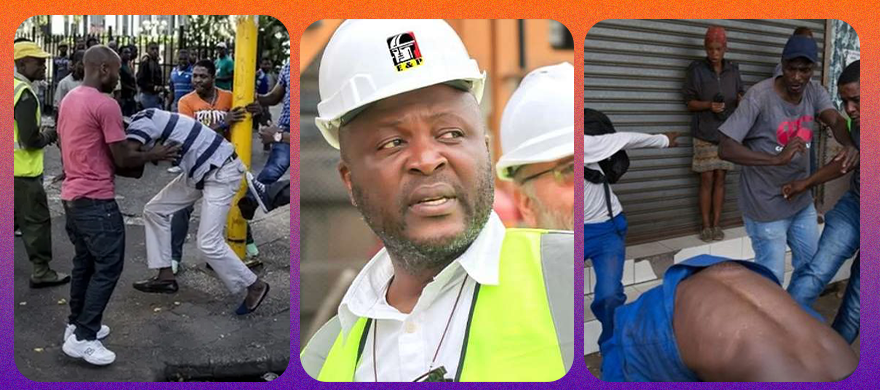
Ghana has always fostered the role of Pan-Africanism, and we hold ourselves in high esteem for that. Our first President, Kwame Nkrumah, believed in the vision to unite the African continent. We welcomed people from all over Africa who were fighting against unfair treatment, and we gave them the help they needed. But now, we are deeply saddened and angry to see that some people in South Africa are attacking their fellow Africans just because they are from a different country. This is not just a problem for South Africa - it's a tragedy for the whole of Africa. It goes against everything we stand for as Africans, and it hurts our shared sense of identity.
What is Xenophobia?
The term describes the irrational fear and dislike of strangers or foreigners in a country. But in South
Africa, xenophobia has been narrowed down to Afrophobia, because as seen in viral videos and reports, it's
mostly Black Africans being targeted. It's not that the South African nationals who are Afrophobic simply
dislike African foreigners - they are actually hurting them. Looting and closing their shops. Harassing
them. And in the worst cases, killing them.
The xenophobic attackers claim that foreigners are taking their jobs, committing crimes, and using up
resources - which they say is preventing South African nationals from finding employment. But that's not
true. A lot of these foreigners are actually working hard and starting their own businesses, which helps the
local community.
A Pattern That Keeps Repeating
Many Ghanaians travel to South Africa to find better jobs, start businesses, or offer services - but they
often face serious problems. They get harassed, their shops are burned, and they are attacked brutally. In
recent years, from 2024 to 2026, there have been many incidents in cities like Johannesburg, Durban,
Pretoria, and KwaZulu-Natal. Some groups, like Operation Dudula and the Put South Africa First movement,
have been conducting so-called "clean-up" operations that scare and hurt foreigners who own small shops and
live in these areas. Videos of Ghanaians being confronted, beaten, or told to "go fix your country" have
made a lot of people back home very angry.
This is nothing new. Back in 2008, there were some really bad outbreaks of violence that killed a lot of
people, including many foreigners. It happened again in 2015 and 2019, with Nigerians, Zimbabweans, Somalis,
and Ghanaians among those targeted. The same pattern keeps repeating: people struggling to make ends meet,
unemployment sitting at over 30%, deep inequality - and then politicians blaming outsiders for the country's
problems, adding fuel to the fire. The government says it condemns the violence and promises to act, but
critics say not enough is being done. They believe the police should be cracking down harder on the
vigilantes carrying out these attacks, but instead they seem to be letting them get away with it.
A Betrayal of the Ubuntu Spirit
When we look at this from a Ghanaian perspective, it's hard not to feel that it goes against everything we thought we were fighting for. During apartheid, Ghana and many other African countries stood firmly by South Africa - giving support morally, materially, and diplomatically. Nelson Mandela and the African National Congress found refuge and solidarity all over the continent. So to see South Africans now attacking their fellow Africans feels like a deep betrayal - a break in the Ubuntu spirit that says, "I am because we are." It's a painful reminder that the unity and solidarity that once defined our struggle for freedom is fraying.
The Human Cost for Ghanaians
Many Ghanaians call South Africa home, where they work hard, start businesses, send money back to their families, and share their skills with the community. But lately, they've been living in fear. The government of Ghana, led by President John Dramani Mahama, has taken strong action to help its citizens. The Foreign Ministry has warned people about the dangers, called in the South African ambassador to discuss the issue, and set up special phone lines for Ghanaians who need help. Most notably, President Mahama arranged for about 300 Ghanaians in difficult situations to be flown back home safely. What's striking is that over 15,000 people signed up for possible assistance - a number that shows just how widespread the worry really is.
Ibrahim Mahama's Generosity
One story that touched many hearts is that of Emmanuel Asamoah, a Ghanaian victim of these attacks. After
surviving harassment and violence, he was repatriated. And in true Ghanaian fashion - where family and
community uplift the vulnerable - President Mahama's younger brother, prominent businessman Ibrahim Mahama,
stepped forward in a powerful way.
Ibrahim gave Asamoah GH¢200,000 - equivalent to around $18,000 - to help him get back on his feet. This
generous gift allowed Asamoah to rest, reconnect with his loved ones, and recover from his ordeal. But
what's even more remarkable is that Ibrahim also promised to set up a cement distribution and hardware
business for him, providing a steady and reliable source of income, as well as a sense of dignity and
purpose. In their conversations, which were widely shared, Ibrahim urged Asamoah to stay strong,
disciplined, and focused on rebuilding his life. He also took the opportunity to praise Ghana's High
Commissioner in South Africa for his tireless consular support.
The Way Forward
We call for stronger accountability - prosecution of perpetrators, better policing, and community education
against hate. African Union discussions, as requested by Ghana, are vital. Continentally, we must invest in
youth employment, skills training, and fair trade so that citizens are not forced to migrate under
duress.
For returning victims like Emmanuel Asamoah, stories of resilience give us hope. With support from figures
like Ibrahim Mahama, they can rebuild and contribute to Ghana's reset agenda under President Mahama - a
vision focused on jobs, infrastructure, and economic growth.
Because at the end of the day, the strength
of Africa has always been its people. And we cannot afford to turn on each other.