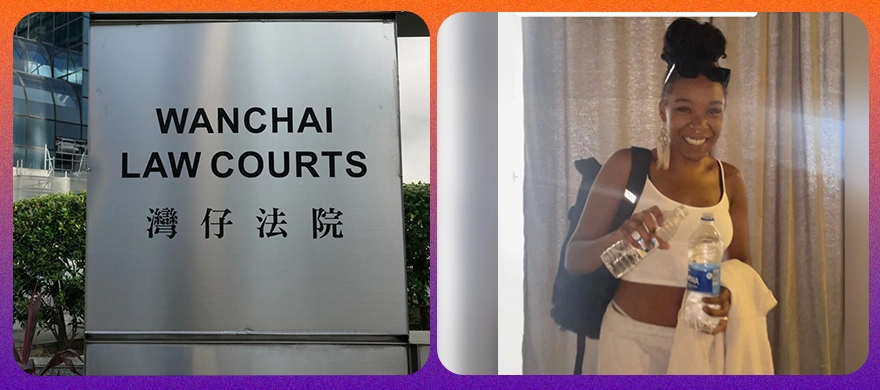
A British woman is starting a six-year prison sentence after a Hong Kong court found she invented a rape
allegation to squeeze £100,000 out of a man she barely knew. Her name is Isabel Anonia Barbra Eudora Rose,
26, and yes - this happened in Hong Kong, which is a special administrative region of China, not mainland
China. That distinction matters, because a lot of headlines are just saying "China" and readers assume it's
Beijing or Shanghai.
Rose, an event management professional from London, flew into Hong Kong on January 31, 2024, to visit a man
she'd met on a trip to Thailand the month before. She alleged he raped her that night at his one-bedroom
flat in Central. A District Court judge didn't believe her, convicted her of blackmail and perverting the
course of justice, and handed down the sentence this past Wednesday, July 22, 2026.
The messages that sank her case
The day after the alleged assault, Rose and the man exchanged messages discussing both what had happened
and possible compensation. One line has now gone viral across British and Hong Kong tabloids: Rose texted,
"You basically raped me," and the man replied, "That is not what I'm into at all and I feel
sick."
That exchange became central to the prosecution's case. Judge Adriana Noelle Tse Ching said the messages
undermined the rape allegation, noting they were inconsistent with Rose's claim, and concluded the
allegation had been fabricated. The judge found the pair had engaged in intimate acts but did not have
penetrative intercourse, and a forensic examination turned up bruising on Rose's neck but no genital
injuries.
Rose had reported the alleged rape to police in February 2024, and the banker was arrested, then later
released without charge. Instead, Rose herself was charged with blackmail and perverting the course of
justice. A guilty verdict came down in March this year, and sentencing followed this week.
At sentencing, Judge Tse said Rose had taken advantage of the man's "kindness, naivety, friendship and
romantic interest" to blackmail him.

What Rose herself has said
This part hasn't been fully settled in public reporting. Rose told the South China Morning Post she couldn't believe what had happened, saying "none of it makes sense," and claimed that within 24 hours of reporting the rape, police had shifted to treating the case as a blackmail matter against her instead. She's also been quoted describing her time in custody as something she now has to "suck it all up" over. Her legal team's next move - whether an appeal is coming - has not been confirmed as of July 23, 2026, so treat any claim of an appeal you see elsewhere as unverified until a lawyer or court filing confirms it.
Why this one matters
For Ghanaians who travel, work, or study abroad - especially in Asia's finance and hospitality hubs where a
lot of our young professionals are chasing opportunities - this case is a reminder of how fast a personal
dispute can flip into a criminal one on both sides. Hong Kong courts moved from a rape complaint to a
blackmail conviction inside roughly two years, and the paper trail (text messages, forensic reports)
did the heavy lifting either way. That's the same standard that would apply to anyone here dealing with an
accusation, true or false, abroad.
It also lands differently in Ghana than it might in the UK press, because our own courts and public
conversations around sexual assault allegations already carry heavy stigma on both sides - for survivors who
are often disbelieved, and for men who can be publicly branded before any court process even starts. A case
like Rose's, where a judge explicitly ruled the allegation fabricated after examining digital evidence, is
going to get cited by people arguing very different things: some will use it to cast doubt on rape
complaints generally, others will point out this is one specific, adjudicated case and shouldn't be
generalised. Both takes miss that courts increasingly rely on forensic and digital evidence to test claims
either way - which cuts against false accusers and against genuine assault happening without a paper
trail.
The court's verdict stands as the only settled fact here: a fabricated rape claim, evidenced by the
accuser's own messages, that turned a blackmail attempt into a six-year prison term.