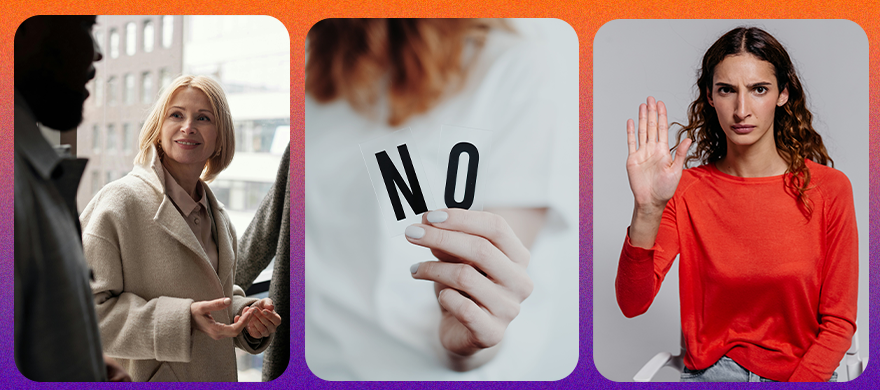
Why We Feel Guilty for Setting Boundaries
Guilt is one of the most powerful emotions we experience. It is designed to make us question our actions.
But not all guilt is valid , and when it comes to boundaries, guilt often lies to us.
We feel guilty because:
- We were raised to be people-pleasers
- We fear being seen as difficult, cold, or unkind
- We confuse boundaries with rejection
- We have been conditioned to put everyone else's comfort before our own
Here is what you must understand: guilt after setting a boundary does not mean you did something wrong. It means you did something unfamiliar. There is a massive difference.
What Boundaries Actually Are
A boundary is simply a statement of what you will and will not accept. It is not an attack on someone else.
It is an act of self-respect.
Boundaries can be:
- Emotional , "I need you to speak to me with respect."
- Time-based , "I am not available after 8pm."
- Physical , "I am not comfortable with that."
- Financial , "I cannot lend you money."
- Energy-based , "I cannot take on any more right now."
Every single one of those statements is valid. Every single one of those statements is necessary.
How to Set Boundaries Without the Guilt
1. Start Small
You do not have to go from zero to "I have cut off everyone who drains me" overnight. Start with one small boundary in a low-stakes situation. Practice saying no to something minor. Build the muscle. Confidence grows with repetition.
2. Be Clear and Direct
One of the biggest mistakes people make is over-explaining or apologizing excessively when setting a
boundary. You do not owe anyone a lengthy justification for protecting yourself.
Instead of:
I'm so sorry, I really would love to help but I have so much going on and I feel terrible saying this but..
Try this:
I can't take that on right now, but I appreciate you thinking of me.
Be honest, respectfully, thats all.
3. Separate Their Reaction from Your Responsibility
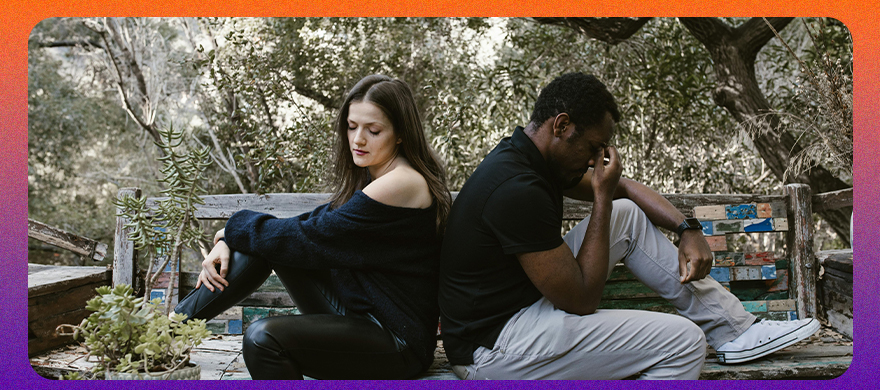
When someone reacts badly to your boundary , with anger, guilt-tripping, or silence , it can feel like confirmation that you did something wrong. It is not. How someone responds to your boundary is their work, not yours. You are responsible for setting the boundary kindly and clearly. You are not responsible for managing every feeling it triggers in someone else. People who truly respect you will adjust. People who push back hard when you set healthy limits are showing you exactly why those limits were necessary in the first place.
4. Remind Yourself of the Cost of Having No Boundaries
Think about what life looks like without boundaries. The constant exhaustion. The resentment that quietly
builds. The feeling of being used. The slow erosion of your own identity as you bend yourself into whatever
shape others need.
Boundaries are not the problem. The absence of them is.
5. Reframe What Boundaries Mean
Stop seeing boundaries as acts of cruelty. Start seeing them as acts of love , for yourself and for others.
When you are clear about what you need, you show up better in every relationship. You become more present,
more generous, and more genuinely yourself.
A full cup pours more freely than an empty one.
Give Yourself Permission
You do not need anyone's approval to set a boundary. You do not need to wait until you are pushed to your
absolute limit. You do not need to feel certain before you speak up.
You are allowed to change your mind. You are allowed to say "that no longer works for me." You are allowed
to choose yourself , not instead of others, but alongside them.
Setting boundaries is one of the most powerful things you can do for your mental health, your relationships,
and your future. The guilt will fade. The freedom will not.
Start today. Start small. Start somewhere.
You deserve a life that reflects what you actually value , and that begins the moment you decide your needs
matter too.